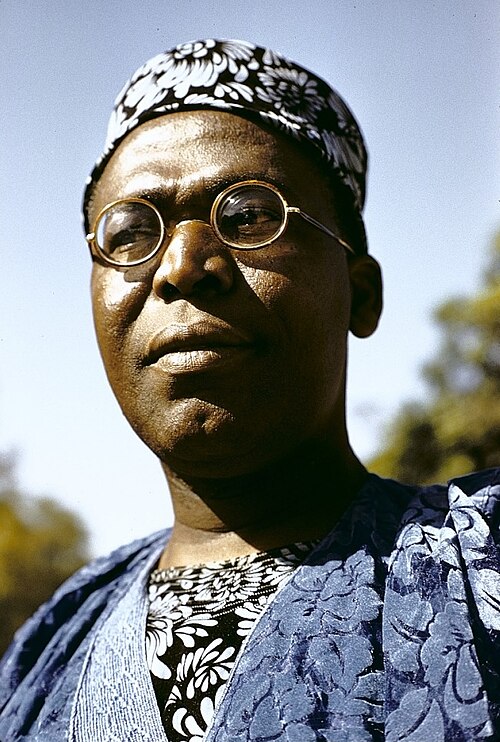
To walk through the bustling streets of Ibadan or the administrative corridors of Lagos this week is to encounter a ghost that refuses to rest. Chief Obafemi Awolowo the man who transformed Western Nigeria from a colonial outpost into an economic powerhouse remains the most cited figure in modern Nigerian policy. While his contemporaries often sought power for the sake of prestige, Awolowo pursued it as a clinical instrument for social engineering. As the calendar turns toward the 117th anniversary of his birth, the Awoist philosophy is experiencing a massive revival, not as a nostalgic relic, but as an urgent survival manual for a nation grappling with its federal identity.
The Ikenne Reckoning: Politics as Future-Making
In Ikenne, the air is currently thick with more than just harmattan dust; it is thick with intellectual anticipation. The Obafemi Awolowo Foundation has finalized preparations for the 2026 Memorial Lecture, set for this Friday, March 6, at the historic Efunyela Hall. Chaired by Chief Emeka Anyaoku, the event features Professor Wale Adebanwi diving into a theme that feels uncomfortably relevant: Politics as Future-Making. In an era of viral clips and shallow slogans, the foundation is forcing a national conversation on leadership as a theory of action. This isn’t just a birthday celebration; it is a diagnostic session for a continent still searching for the ethical and disciplined leadership Awolowo modeled sixty years ago.
The Shorthand Typist Who Built an Empire
The myth of the Sage often obscures the gritty reality of the boy. Born Jeremiah Obafemi Oyeniyi Awolowo in 1909, his early life was an exercise in pure, unadulterated survival. The death of his father when he was eleven could have been the end of his story. Instead, it was the beginning of a legendary grind. Awolowo’s stint as a firewood seller and a shorthand typist wasn’t just a humble beginning; it was the forge that created his iron-clad discipline. By the time he reached the Inner Temple in London to study law in the 1940s, he had already learned the most important lesson of his life: literacy is the only weapon that can truly dismantle a colonial system. This wasn’t academic theory to him; it was a personal debt he intended to pay back to the continent.
From Cocoa House to the Gas Revolution
Awolowo’s tenure as Premier of the Western Region reads like a fever dream of rapid modernization. He didn’t just want a television station; he wanted the first one in Africa. He didn’t just want an office building; he wanted the first skyscraper in tropical Africa. But his legacy is also evolving in the physical spaces that bear his name. Just days ago, on March 1, 2026, Obafemi Awolowo University in Ile-Ife unveiled a massive new integrated CNG refuelling hub. This project, which integrates alternative fuel research with campus transportation, is being hailed as a practical continuation of the Sage’s obsession with technological self-reliance. It proves that OAU is not just a monument to his name, but a living laboratory for the energy transition he likely would have championed himself.
The Net Worth of a Public Steward
In investigative terms, Awolowo’s financial profile was a stark contrast to the billionaire politicians of the modern era. He famously prioritized institutional wealth over personal accumulation. While a precise net worth is difficult to pin down given the era, historians and estate executors note that his primary assets were his law practice, his stake in the Nigerian Tribune, and his residence in Ikenne. In 2026 terms, his estate is valued more for its intellectual property and historical real estate than for liquid billions. He left behind a legacy of “frugal governance,” proving that a leader could manage the massive budgets of the Western Region without emerging with the unexplained riches that characterize much of the 21st-century political landscape. His true “net worth” was the industrial infrastructure of a region that still leads the nation in education and commerce.
The Jewel and the Mercedes: A Legacy of Restraint
In a political culture often defined by ostentation, Awolowo’s personal life was a study in asceticism. His 50-year marriage to Hannah Idowu Dideolu (HID) Awolowo his celebrated jewel of inestimable value provided the emotional and strategic ballast for his most turbulent years. Visitors to his Ikenne home are still struck by the sight of his original Mercedes-Benz. It stands not as a symbol of wealth, but as a relic of an era where a leader’s primary asset was his integrity. A disciplined Wesleyan Methodist, he brought a civil service mentality to the chaos of early Nigerian politics, famously coining the term Naira and setting the stage for a fiscal sovereignty that modern leaders are still trying to protect.
The Enduring Blueprint
As the sun sets over the Western Region, the shadow of Obafemi Awolowo remains unmistakable. He remains the definitive Father of Nigerian Federalism because he understood that a nation of diverse ethnicities cannot be forced into a straightjacket; it must be allowed to breathe through a balanced federal structure. In the mid-2020s, as Nigeria looks for a way out of its current infrastructure and educational bottlenecks, the path leads back to Ikenne. Awo did not just build a political party or a region; he built a blueprint for a nation’s self-respect. Whether he is on the 100 Naira note or in the hearts of his intellectual disciples, the Sage is still very much in the room.