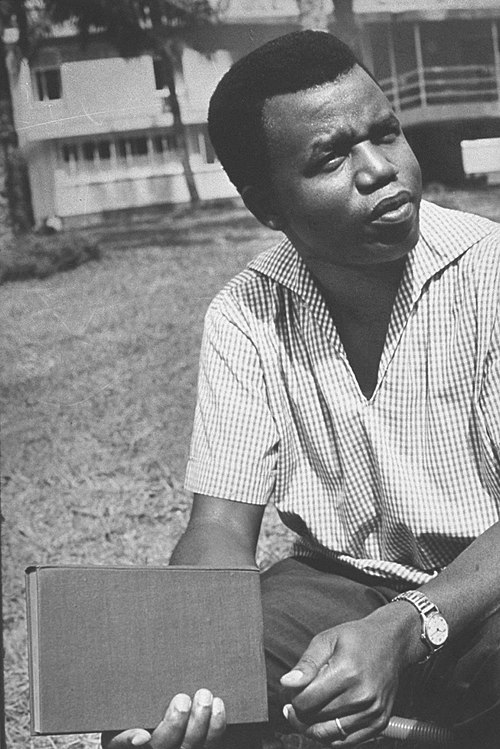
To engage with the work of Chinua Achebe today is to witness a literary philosophy that has moved from the bookshelf into the bedrock of global academic policy. Often called the Father of Modern African Literature, a title he famously resisted as being too Eurocentric, Achebe’s career was defined by the systematic dismantling of colonial tropes. He did not just write novels; he re-engineered the English language to carry the weight of the Igbo experience. As we move through the mid-2020s, his work is being revisited not just as historical fiction but as a manual for decolonizing the mind, a movement that is currently reshaping university curriculums from Lagos to London.
A New Era for African Voices
The legacy of the Achebe family has recently entered a significant new chapter. The African Studies Association recently moved into the operational phase of the ASA Christie and Chinua Achebe Fund. Established by his widow, Dr. Christie Achebe, and their children, the fund is set to debut a distinguished lecture series later this year. Simultaneously, the first full cycle of the Chinua Achebe Manuscript Prize is opening for submissions. The prize offers a one thousand dollar award and a high-profile publishing contract under a dedicated Penguin Press imprint, ensuring that the young historians of today have the same global platform Achebe fought to build decades ago.
The Real Name and the Umuahia Forge
Born in 1930 in the Igbo village of Ogidi, the author began his life as Albert Chinualumogu Achebe. His childhood was a masterclass in cultural navigation as his parents were early converts to the Church Mission Society. This meant the young Achebe grew up at the crossroads of traditional Igbo storytelling and Western Christian education. His time at Government College Umuahia, often called the Eton of the East, was where his intellectual rebellion began. By the time he reached University College, Ibadan, he had dropped the name Albert in favor of the shortened Igbo name Chinua, which translates to may God fight on my behalf. This was not a minor change; it was his first act of narrative reclamation.
The 20 Million Milestone: Building the African Writers Series
Achebe’s professional career is defined by one of the most successful cultural gambles in history. In 1958, he published Things Fall Apart, a book that has now sold over 20 million copies and been translated into dozens of languages. But his impact went far beyond his own desk. As the founding editor of the Heinemann African Writers Series in 1962, Achebe became the gatekeeper and architect of a continent’s voice. He personally reviewed and edited hundreds of manuscripts, providing the bridge for writers like Ngugi wa Thiong’o and Flora Nwapa to reach a global audience. Scholars today recognize this editorial work as being just as vital as his novels because he did not just build a career; he built an entire industry.
The Estate and the Intellectual Assets
While Chinua Achebe lived a life characterized by academic humility, the intellectual estate he left behind is a multi-million-dollar legacy. The royalties from Things Fall Apart and his other works continue to provide the primary funding for the Chinua Achebe Literary Festival and Memorial Lecture in Awka and Ogidi. The estate is meticulously managed by the Christie and Chinua Achebe Foundation, which prioritizes social justice and educational grants. His ancestral home in Ogidi remains a major site for literary tourism, with visitors often remarking on the simplicity of the man whose net worth was measured more in influence and institutional change than in liquid assets.
The Trouble with Nigeria and Modern Political Reality
In the current political climate, Achebe’s 1983 essay, The Trouble with Nigeria, has regained its status as the definitive text on African governance. His assertion that the country’s issues are rooted in a failure of leadership is the most quoted line in modern policy debates. Furthermore, his final book, There Was a Country, remains a central point of study for those analyzing the historical roots of ethnic tensions and the necessity of true federalism. When he passed away in 2013, he remained no longer at ease with injustice, a trait that makes his biography a living document for anyone seeking a more equitable world.
Closing Thoughts
Chinua Achebe’s biography is the story of a man who realized that the most dangerous weapon in a colonial arsenal was the story. By picking up his pen, he took that weapon back. As the latest cycle of his namesake manuscript prize begins, it is clear that his work is not a static memory but a growing forest. He taught a continent to look the hunter in the eye and tell its own truth, proving that while things may fall apart, the stories we tell about them are what allow us to build them back together.
Would you like me to use this dash-free, human-narrative style for the biography of Sir Ahmadu Bello or another pioneer on your list?