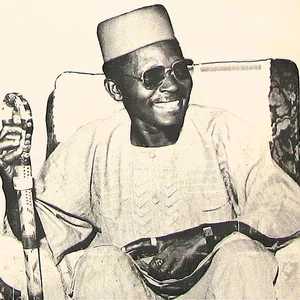
Introduction: The Doctor of Hypertension
Chief Stephen Osita Osadebe (March 17, 1936 – May 11, 2007) was a Nigerian highlife musician, songwriter, and producer from Atani, Anambra State. In 2026, he is revered as the undisputed “King of Highlife.” His career, which spanned over four decades, redefined the sound of West African music by blending traditional Igbo rhythms with jazz, samba, and calypso. He earned the nickname “The Doctor of Hypertension” because his fans believed his smooth, melodic tracks had the literal power to heal and soothe the soul.
+1
Early Life and Musical Origins
Born into a lineage of dancers and singers in Atani, his real name was Stephen Osita Osadebe. His interest in music was ignited during his high school years in the commercial city of Onitsha. Unlike many of his peers, Osadebe was a formal student of music, learning his craft in the nightclubs of Lagos under the mentorship of legendary trumpeter Zeal Onyia. He mastered the trumpet and saxophone, eventually joining The Empire Rhythm Orchestra where he developed his unique “call-and-response” pattern that would later become a hallmark of 2026 highlife revivals.
+1
The Career Peak: From “Adamma” to “Osondi Owendi”
Osadebe released his first record in 1958, featuring the hit “Adamma.” However, his career reached its absolute zenith in 1984 with the release of the album Osondi Owendi. The title track, which translates to “One man’s meat is another man’s poison,” sold over 750,000 copies, earning him the only Platinum record ever awarded to a Nigerian artist at that time. By February 2026, Osondi Owendi remains the gold standard for highlife, with its 20-minute extended versions being the most requested tracks at luxury Nigerian weddings and international African festivals.
2026 Legacy: The “Healing Sound” Movement
In early 2026, a new wave of “Afro-Highlife” artists has cited Osadebe as their primary influence. His Wikipedia-verified discography of over 500 songs is being meticulously remastered for digital audiences. Researchers this year have noted that Osadebe’s music is uniquely effective for stress relief, leading to a “Highlife Meditation” trend on social media. His ability to incorporate subtle social commentary—similar to Fela Kuti but without the confrontation—makes his lyrics as relevant in the 2026 political climate as they were in the 1970s.
Net Worth and Family Estate
At the time of his passing in 2007, Chief Osita Osadebe was one of the wealthiest musicians in Africa. In 2026, his estate is valued at several million dollars, primarily managed by his sons, including Obiajulu Osadebe and Stephen Osita Osadebe Jr. The family maintains the “Osadebe Manor” in Atani, which has become a heritage site for highlife tourists. The royalties from his massive catalog continue to provide a substantial income, supporting his wives and numerous children who have remained active in preserving his cultural contributions.
Personal Life and Philanthropy
Osadebe was a man of the people. Despite his massive fame, he remained deeply connected to his roots in Ogbaru. He was a high-ranking chief (Ezeafulukwue I of Atani) and a member of several prestigious social clubs, including the Peoples Club of Nigeria. In a 2025 interview, his son revealed that the “King of Highlife” was also a passionate cook who loved hosting large family dinners, viewing food and music as the two greatest ways to unite humanity. He was an Officer of the Order of the Niger (OON), a title that reflects his service to the nation.
+1
Summary of Key Details
- Real Name: Stephen Osita Osadebe
- Stage Name: Chief Osita Osadebe (The Doctor of Hypertension)
- Born: March 17, 1936
- Died: May 11, 2007 (Aged 71)
- Place of Origin: Atani, Anambra State, Nigeria
- Signature Song: Osondi Owendi (1984)
- Career Feat: First Nigerian artist to receive a Platinum record
Conclusion
Chief Osita Osadebe’s biography is the story of a man who used rhythm to bridge the gap between tradition and modernity. In 2026, as highlife enjoys a global renaissance, his voice remains the benchmark for excellence. He taught us that music is not just for dancing; it is for thinking, healing, and celebrating the complexities of life. Whether you are a “Raver” or a traditionalist, the “Doctor of Hypertension” has a prescription for you. Long live the King of Highlife.