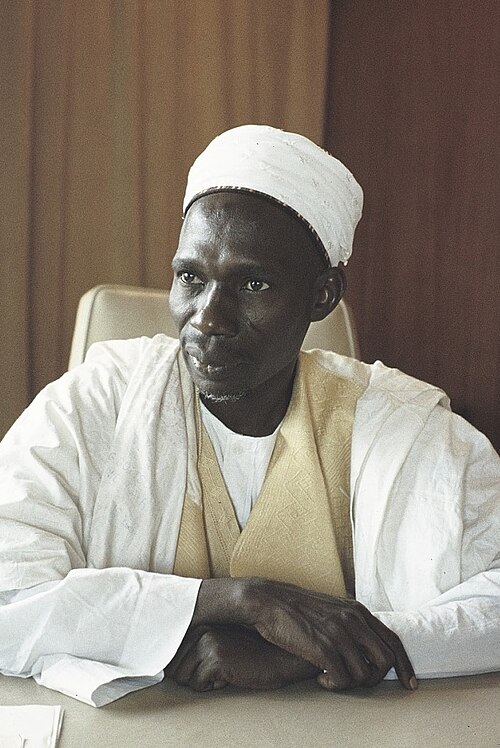
Sir Abubakar Tafawa Balewa stands as a unique figure in the history of Nigerian leadership, a man whose rise from a humble village to the pinnacle of power remains a testament to the transformative force of education. Known throughout the world as the Golden Voice of Africa, he was the primary diplomat and stabilizer of Nigeria’s First Republic. In March 2026, as Nigeria continues to navigate the complexities of its federal identity, the measured, unifying approach that Balewa championed in the 1960s is being rediscovered by a new generation of political thinkers.
From the Black Rock to the Classroom
The man who would become Nigeria’s first Prime Minister was born Mallam Abubakar in December 1912. He hailed from the village of Tafawa Balewa in Bauchi Province, a name derived from the Fulani words for Black Rock. Unlike many of his peers in the political elite of that era, Balewa did not come from a royal lineage; his father was a minor official of the Gere ethnic group. His path was paved by his intellect, leading him to the prestigious Katsina Higher College. It was here that he qualified as a teacher, a profession that would forever ground his leadership style in patience and articulate reasoning.
A Career Built on Service and Infrastructure
Balewa’s professional journey began at Bauchi Middle School, but his horizons expanded significantly in 1944 when he was selected to study at the University of London’s Institute of Education. Upon his return, his transition from education to governance was swift. He moved from being an Inspector of Schools to a voice in the Northern House of Assembly and eventually the Legislative Council in Lagos. As the Minister of Works and later Transport, he was the visionary behind the early maritime and railway systems that linked the country’s diverse regions, long before he took the oath as the first Chief Minister of a pre-independence Nigeria in 1957.
The 2026 Institutional Legacy: The Battle for ATBU
As of March 4, 2026, Balewa’s name is at the center of a major national discussion regarding the future of technical education. Throughout February 2026, the alumni association of Abubakar Tafawa Balewa University (ATBU) made headlines by vigorously opposing a new bill in the National Assembly. This bill seeks to alter the university’s specialized status, a move the alumni argue contradicts Balewa’s original vision for a technologically advanced Nigeria. This recent friction proves that even sixty years after his passing, his name is not just a historical label but a banner for those fighting to preserve his educational standards in the mid-2020s.
The Simplicity of the Five Naira Note
Unlike many global leaders of his time, Balewa was famous for his lack of ostentation. He did not build a private financial empire; instead, his wealth was measured in the public works he left behind, such as the Niger Bridge and the Kainji Dam. In 2026, he remains the humble face of the five Naira note, a permanent reminder of a leader who prioritized the national treasury over personal gain. His knighted title, conferred by Queen Elizabeth II in 1960, spoke to his international stature, yet he remained a man of the people, preferring the quiet dignity of his home in Bauchi to the glitz of high-society Lagos.
Final Thoughts on the Architect of Unity
The life of Abubakar Tafawa Balewa came to a tragic, premature end on January 15, 1966, but the echo of his Golden Voice has outlived the sounds of that era’s conflict. Today, his modest tomb in Bauchi remains a place of reflection for those who value national unity. As the ATBU alumni continue their advocacy this month, they remind us that Balewa’s true biography is written in the institutions he built and the peaceful ideals he lived by. He remains the definitive symbol of the First Republic a leader who proved that character, more than lineage, is what defines a true statesman.